Custom Stickers for Clothing Brands: Packaging & Unboxing Ideas
Custom stickers for a clothing brand do four jobs: they seal the package, carry your logo, add a free gift, and give customers something to share. The simplest setup that works is a logo sticker on the seal, a small sticker inside the parcel and one themed sticker sheet as a gift. Choose vinyl when a sticker will be handled, stuck on a bottle or exposed to weather, and paper for seals and inserts. Order from a supplier that matches your brand colours and your labels and hang tags.
Below: the data behind unboxing, a material comparison, six sticker ideas, an ordering guide, a checklist and a case study of a brand that grew from stickers.
Why Packaging Stickers Pay Off
Three figures from Dotcom Distribution, as cited in a packaging industry article, show why brands invest in the unboxing moment:
- 40% of consumers would post an image of packaging on social media when it is unique or branded.
- 61% say they are much more likely to repeat a purchase of a luxury product that arrives in premium packaging.
- 35% report watching unboxing videos.
Treat these as directional: the original research year, sample size and method are not stated, and the 61% figure covers luxury products, not all apparel (source: Action Packaging).
What a sticker adds is cheap, repeatable branding. Even at the entry size one printer lists, 25 vinyl stickers cost $25, and the unit price falls as runs grow. A sticker is also the one piece of packaging customers peel off and keep, so it travels beyond the parcel.
Vinyl vs Paper: Which Brand Stickers for Packaging Suit You?
The material decides how your sticker survives shipping, rain and handling. These figures come from one printer’s buying guide, so confirm them with your supplier (source: 4over4).
| Material | Outdoor life | Water and wear | Finish options | Best for |
| Vinyl | 3 to 5 years | Waterproof, tear-resistant | Gloss, matte or clear | Stickers customers keep, bottles, laptops, parcel exteriors |
| Paper | Weeks to a few months | Smears and softens when wet | Uncoated or semi-gloss, natural matte look | Box seals, inserts, gift labels |
Two cut styles matter too. A die-cut sticker follows your logo outline, and a kiss-cut sticker is cut through the sticker layer only, so it peels off a backing sheet. Die-cut suits a single logo seal, while kiss-cut suits a sheet of several designs.
Rule of thumb: use vinyl for anything a customer is meant to keep, and paper for anything meant to be torn open.
6 Unboxing Sticker Ideas for Clothing Brands
- The seal that doubles as a signature. Put a die-cut logo sticker across the tissue paper fold or box flap. Opening the parcel breaks it, which also signals the order has not been touched.
- A quiet logo on the mailer. Keep it small and leave space for the shipping label, so the parcel looks designed rather than cluttered.
- An inside-the-lid line. One short sentence, such as the drop name or a thank-you, stuck where the customer sees it first.
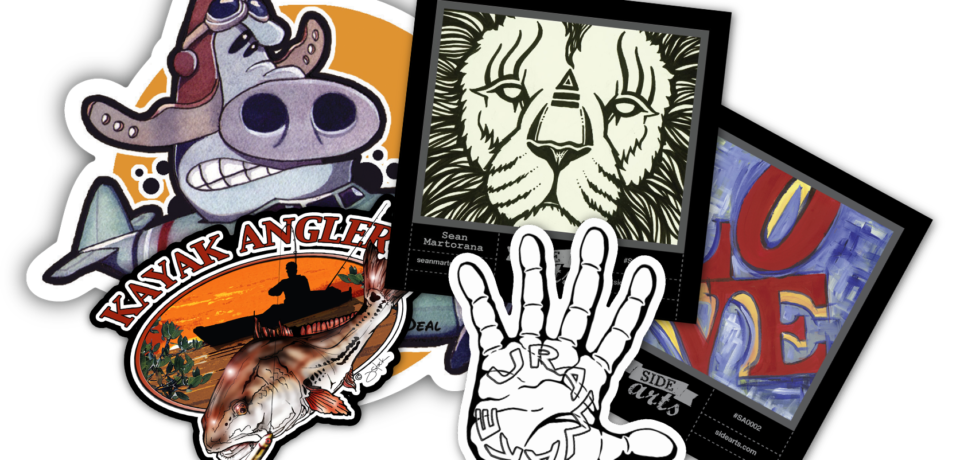
- A gift sticker sheet. Four to six designs from your latest drop, kiss-cut on one backing sheet. Customers put them on laptops and bottles, which gives you free placement.
- Drop-coded colours. Change the sticker colour with each release so repeat buyers start collecting the set.
- A QR sticker. Link it to a care guide or styling video, so the packaging leads into your content.
For a cohesive look, match sticker colours and fonts to your woven labels and hang tags, so the garment, the tag and the parcel read as one brand.
How to Order Custom Stickers for Your Brand in 5 Steps
- Give each sticker one job. Seal, insert or gift. A sticker that tries to do all three usually does none well.
- Pick the material. Vinyl for keepsakes and exteriors, paper for seals and inserts.
- Set the size and shape. Paper stickers run from about 0.375 x 1 in up to 3 x 4 in, and vinyl from about 2 x 3.5 in up. For a box seal, a circle of around 2 in is a practical starting point. Send vector artwork.
- Approve a proof. Check colours against your brand values and your labels, since screens and print never match exactly.
- Test on a real parcel. Stick one on your actual mailer or box, peel it, rub it and splash it. Adhesive that suits a gloss box may fail on a poly mailer or kraft tissue.
Order stickers with enough lead time to land before your garments do.
Checklist: Choosing a Custom Stickers Manufacturer
- Offers both vinyl and paper, with gloss, matte and clear finishes
- Cuts custom shapes (die-cut) and sheets (kiss-cut) as well as simple rounds
- Sends a proof before printing and matches your brand colours
- Recommends an adhesive for your actual packaging surface
- Sets a minimum order that fits a single drop, not just a year of stock
- Quotes production and shipping time in writing
- Can match stickers to your woven labels and hang tags, ideally from one supplier
- Replies quickly to questions, a good sign for how reorders will go
Six or more ticks means a supplier worth sending a test order to.
Case Study: The Sticker That Became a Clothing Brand
In 1989, Shepard Fairey was a student at the Rhode Island School of Design in Providence. With friends, he made paper and vinyl stickers reading “ANDRE THE GIANT HAS A POSSE.” Skater and graffiti communities spread them from Providence to Boston, New York and beyond. By the mid-to-late 1990s there were tens of thousands of hand-made stickers, posters and stencils in public places worldwide (source: Wikipedia). In 1996 the image became “Obey Giant,” and in 2001 Fairey launched OBEY Clothing, letting followers wear the art (source: Coggles).
What it means for your brand: the stickers built the audience before the apparel existed. Fairey’s were an art project, not shipping packaging, but the principle carries over: a sticker is a small billboard that people place for you. One consistent mark, repeated until it is recognised, can do more than a single big campaign.
Frequently Asked Questions
What are the best custom stickers for a clothing brand’s packaging?
A logo sticker on the seal, a small sticker inside the parcel and a gift sticker sheet cover most brands. Use paper for seals and inserts, and vinyl for stickers customers will keep or stick on bottles and laptops.
Should I choose vinyl or paper stickers for packaging?
Choose vinyl for stickers that get handled or exposed to water. One printer guide puts vinyl at 3 to 5 years outdoors and paper at weeks to a few months, with paper smearing when wet. Paper suits box seals and inserts that are torn open anyway.
Do unboxing stickers actually help sales?
There is no proof a sticker alone lifts sales, but the signs are encouraging. Dotcom Distribution figures cited in a packaging article say 40% of consumers would post unique branded packaging and 61% are more likely to repurchase luxury products in premium packaging. The method is not stated, so treat them as directional.
What size should packaging stickers be?
One printer lists paper stickers from about 0.375 x 1 in up to 3 x 4 in, and vinyl from about 2 x 3.5 in up. A circle of around 2 in is a practical starting point for a box seal. Test it on your real packaging.
Can a clothing manufacturer supply stickers with my order?
Yes. The Apparel Partner can add branded stickers alongside your woven labels, hang tags and packaging, so your garments, tags and parcels arrive as one consistent brand.