Custom Hoodie Manufacturing: Styles, Fabrics & MOQs Explained
A custom hoodie manufacturer makes hoodies to your design: it sources the fabric, cuts and sews to your tech pack, adds your decoration and labels, and ships in bulk. Three decisions shape every order: style (pullover, zip-up or oversized), fabric (fleece or French terry, and its GSM) and minimum order quantity. Hoodie manufacturers typically set minimums between 50 and 500 units per style, so a streetwear start-up can begin small, but each colourway usually counts toward its own minimum.
Below you will find a style comparison, a fabric guide, the rules behind MOQs, a six-step brief, a vetting checklist and a case study.
Hoodie Styles Compared: Which One Should You Make First?
Style decides your pattern, your trims and your price. Compare the four most common builds before you brief a custom hoodie manufacturer.
| Style | Best for | Typical fabric | Production complexity | Watch out for |
| Pullover (kangaroo pocket) | Retail basics, merch drops | Fleece or French terry | Lowest: no zipper hardware to source | Looks generic without strong decoration or fit |
| Zip-up | Layering, workwear, athleisure | Midweight fleece or French terry | Medium: zipper, tape and pulls add trims | Zipper minimums can raise your overall MOQ |
| Oversized or boxy (streetwear) | Fashion-led drops | Heavy French terry or heavy fleece | Medium: drop shoulder, longer body, wider cuffs | Size grading must be tested; oversized in sample can look sloppy in bulk |
| Cropped | Women’s and athleisure ranges | Midweight French terry | Medium: shorter body needs precise hem and rib | Needs a fit model, not just a size chart |
Starting out, make one pullover and one oversized block. They cover most retail demand with the fewest trims.
Fleece vs French Terry: Choosing Fabric and GSM
The two main hoodie fabrics differ in how the inside is built, and that changes warmth, shape and pilling. The weights below come from one supplier-side sourcing guide, so treat them as ranges to confirm, not standards.
| Fabric | Construction | Typical GSM | Feel | Trade-off |
| French terry | Looped inside, smooth outside | 220 to 320 standard; 320 to 400+ premium | Breathable, structured, holds its shape | Moderate warmth; usually priced slightly higher |
| Fleece | Brushed inside to raise the fibres | 280 to 360 midweight; 360 to 400+ winter-grade | Soft, plush and warm | Bulkier; more prone to pilling, especially in polyester blends |
Two habits save you from nasty surprises:
- Write the exact GSM into your tech pack. “Heavyweight” means different things to different suppliers.
- Ask about pre-shrinking. Cotton blends need it to avoid big size changes after the first wash.
For a streetwear hoodie manufacturer brief, heavy French terry usually gives the structured, drop-shoulder drape that oversized fits depend on.
Hoodie MOQs Explained: Why 50 Units Costs More Than 500
Maker’s Row, a US manufacturer directory, reports that hoodie manufacturers typically work with MOQs of 50 to 500 units per style. Smaller cut-and-sew facilities often start at 50 to 100 units, while larger wholesale makers usually want 250 or more (source). Sourcify’s broader benchmark for cut-and-sew apparel is 300 to 500 units per style and colourway, falling to 100 to 200 for simple styles at established factories (source).
Why the gap? Fabric usually sets the floor. A full roll is typically 50 to 100 metres, and custom-dyed or printed fabric can push the minimum to 500 or more garments. Machine setup is a fixed cost spread across the run.
Five ways to bring your minimum down:
- Simplify the spec: fewer materials, no custom tooling, no special trims.
- Share a realistic growth forecast so the factory prices your first order as the start of a relationship.
- Accept a higher unit price on a smaller run.
- Order in the factory’s slow season, when terms are often more flexible.
- Commit to several orders a year instead of one large one.
A useful middle path: ask whether a 100-unit test order is possible before you commit to a full run.
How to Brief a Custom Hoodie Manufacturer in 6 Steps
- Build the tech pack. Flat sketches, measurements per size, fabric and exact GSM, rib and cuff details, pocket and drawcord specs, and label placement.
- Choose the fabric and colourways. Remember each colourway can carry its own minimum, so launch with two or three, not ten.
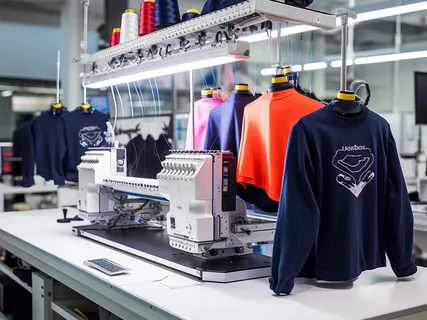
- Pick the decoration. Screen print, embroidery or puff print each have different setup and placement limits. Decide before sampling, since artwork size affects pattern and fabric choice.
- Approve a sample. Maker’s Row puts sampling at about 2 to 4 weeks from an approved tech pack. Wash it, wear it, and measure it again after washing.
- Plan production separately. Budget roughly 6 to 12 weeks from sample approval to bulk delivery, quoted separately from sampling.
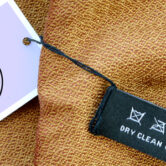
- Finish like a brand. Woven neck labels, care labels and hang tags are what make a hoodie look like a product rather than a blank.
Add the two timelines together: a three-week sample and a ten-week production run means about 13 weeks before stock lands.
Checklist: How to Vet a Hoodie Manufacturer USA
Ask these before you pay for a sample. A vague answer to any of them is useful information.
- States the MOQ per style and per colourway in writing
- Does true cut and sew, or only customises blanks, and says which
- Sources fabric in-house, or needs you to supply it
- Quotes exact GSM and fibre content, not just “heavyweight”
- Tells you whether samples are charged and credited against your first order
- Gives sampling and production lead times separately
- Offers a small test order before the full run
- Holds relevant certifications, such as OEKO-TEX or GOTS, if you plan sustainability claims
- Has a verifiable factory address and references from other brands
- Replies to enquiries quickly, since early response time tends to predict later reliability
Eight or more ticks means a partner worth sampling with.
Case Study: How Champion Turned a Cutting Decision Into a Brand
Champion was established by the Feinloom brothers in 1919 in Rochester, New York. When coaches raised concerns about shrinkage after washing big batches of athletic wear, the brand changed how it made sweatshirts. Most garments are stitched with the fabric grain running vertically because it is faster. Champion instead used a slower method, cutting on the cross-grain, so the fabric runs sideways. The process, called Reverse Weave, was initially patented in 1938 and finalised in 1952.
What it means for your brand: the construction choice became the story. A hoodie’s value sits in decisions customers cannot see in a product photo: grain direction, pre-shrinking, GSM and rib quality. Put those in your tech pack, ask your custom hoodie manufacturer to confirm them in the sample, and then use them on your product page and hang tag.
Frequently Asked Questions
What does a custom hoodie manufacturer do?
A custom hoodie manufacturer turns your design into finished hoodies. It sources fabric, cuts and sews to your tech pack, applies decoration and labels, and delivers in bulk. Some also customise blanks, so ask whether they do true cut and sew.
What is the MOQ for custom hoodies?
Hoodie manufacturers typically set minimums between 50 and 500 units per style. Smaller cut-and-sew facilities often start at 50 to 100 units. Each colourway can carry its own minimum, so ask for the figure per style and per colour.
Which is better for hoodies, fleece or French terry?
Fleece is warmer and plusher but bulkier and more prone to pilling. French terry is breathable and structured, and suits layering and streetwear fits. Pick fleece for cold-weather warmth and French terry for shape and year-round wear.
How long does custom hoodie manufacturing take?
Expect about 2 to 4 weeks for sampling and 6 to 12 weeks for production after sample approval. These are separate timelines, so a three-week sample and a ten-week run means roughly 13 weeks before delivery.
What GSM should a streetwear hoodie be?
One supplier guide puts premium French terry at 320 to 400+ GSM and winter-grade fleece at 360 to 400+. Heavier cloth gives a more structured drape. Always state the exact GSM in your tech pack, since “heavyweight” varies by supplier.