Custom T-Shirt Manufacturing: The Complete Guide for Clothing Brands
Custom T-shirt manufacturing involves producing branded T-shirts with specific fabrics, fits, construction methods, prints, labels, and packaging. To manufacture custom T-shirts successfully, choose your production model, prepare a detailed tech pack, evaluate manufacturers, approve physical samples, confirm production costs, and inspect finished garments before shipment.
For clothing startups and established fashion labels, choosing the right custom t-shirt manufacturer is about more than finding a factory that can print a logo. Your manufacturer determines whether a 220 GSM oversized T-shirt retains its shape, whether your sizing stays consistent across production runs, and whether customers receive the quality your brand promises.
A T-shirt might look impressive in photographs but disappoint after its first wash. That’s why successful brands treat fabric selection, sampling, construction, and quality control as connected decisions.
This guide explains the complete t-shirt production process, from product development to bulk manufacturing, with practical advice for choosing suppliers, avoiding production mistakes, and protecting your margins.
1. Choose the Right Custom T-Shirt Manufacturing Method
The best manufacturing method depends on your brand’s product strategy, budget, and required level of customization.
| Manufacturing method | Customization level | Best for | Main trade-off |
| Print-on-demand | Mainly artwork | Testing graphic designs | Limited garment customization |
| Private label | Branding, prints, selected garment options | Startups launching branded basics | Existing fits and fabric choices |
| Custom cut-and-sew | Fabric, pattern, fit, construction, and branding | Premium and distinctive clothing brands | More development time and cost |
| Full-package manufacturing | Coordinated sourcing, development, and production | Brands seeking one manufacturing partner | Scope and supplier capabilities vary |
Which should you choose? Private label manufacturing is often practical when your differentiation comes from artwork and branding. Custom cut-and-sew is better when the garment itself, its fit, fabric, or construction is your competitive advantage.
For example, a streetwear label developing a heavyweight boxy T-shirt with dropped shoulders needs more than a standard blank with a printed logo. The pattern, fabric, neckline, and finishing must work together.
2. Select Fabric Based on Performance, Not Just GSM
The best T-shirt fabric is the one that delivers your intended fit, comfort, appearance, and durability.
GSM, or grams per square meter, measures fabric weight. It does not independently determine quality.
| Fabric weight | Typical application |
| 120–150 GSM | Lightweight T-shirts |
| 150–180 GSM | Everyday casualwear |
| 180–220 GSM | Substantial premium basics |
| 220–280+ GSM | Heavyweight streetwear |
These ranges are approximate design references, not universal quality grades.
Cotton, Blends, and Performance Fabrics
Combed ring-spun cotton can offer a smooth, soft hand feel suitable for premium everyday T-shirts. Cotton-polyester blends can improve certain durability and dimensional-stability characteristics, while engineered polyester fabrics are common in performance apparel.
However, fabric composition alone cannot guarantee performance. Yarn quality, knit construction, finishing treatments, and laundering conditions also matter.
What Should You Test?
Before approving a fabric, evaluate:
- Shrinkage after laundering
- Colorfastness and color bleeding
- Pilling and surface appearance
- Fabric weight and consistency
- Comfort, drape, and recovery
For objective testing, manufacturers and laboratories can use recognized methods such as AATCC TM135, which evaluates dimensional changes of fabrics after home laundering.
The method provides a repeatable testing procedure; your brand must still establish acceptable shrinkage limits for its product.
3. Develop a Tech Pack That Prevents Production Errors
A tech pack translates your creative design into measurable manufacturing instructions.
Without one, descriptions such as “premium oversized fit” leave too much room for interpretation.
A production-ready tech pack should specify garment drawings, fabric composition, GSM, colors, measurements, tolerances, construction details, decoration placement, labels, and packaging.
Example: Oversized T-Shirt Specifications
The following figures illustrate how specifications might be documented for one sample size; they are not standardized industry measurements.
| Specification | Illustrative requirement |
| Fabric | 100% cotton single jersey |
| Weight | 240 GSM |
| Chest width | 62 cm |
| Body length | 74 cm |
| Shoulder width | 58 cm |
| Measurement tolerance | ±1 cm at specified points |
| Neckline | Ribbed crew neck |
| Branding | Woven neck label and screen print |
A manufacturer can evaluate a chest width of 62 cm against an agreed tolerance. It cannot objectively evaluate whether a T-shirt feels “perfectly oversized.”
Production insight: Define how measurements are taken, not just their target values. Two factories may measure the same garment differently unless the points of measurement are documented.
4. Understand the Complete T-Shirt Production Process
Custom T-shirt manufacturing generally follows six stages.
- Design and Pattern Development
Create garment patterns and size grading based on the approved technical specifications. - Fabric Sourcing
Select fabrics, verify color references, and evaluate material performance. - Sampling and Fit Testing
Produce prototypes, evaluate fit and construction, and revise specifications where necessary. - Cutting and Sewing
Cut fabric panels and assemble garments using the specified stitching and seam construction. - Printing, Embroidery, and Finishing
Apply decoration and branding according to the required production sequence. - Quality Inspection and Packing
Check measurements, workmanship, appearance, labeling, and packing quantities.
A common production mistake is treating the first acceptable-looking prototype as approval for bulk manufacturing.
Instead, confirm a final reference sample and document any changes before production begins.
Case Study: From an Oversized T-Shirt Concept to Production-Ready Samples
1. The Client’s Challenge
A startup streetwear brand wanted to develop a 300-piece collection of premium oversized T-shirts using 240 GSM cotton, dropped shoulders, and custom screen printing. Its biggest priority was achieving a consistent fit across every size.
2. The Manufacturing Problem
During the initial sampling stage, the prototype showed excessive shrinkage after washing, while the neckline lost its intended shape. The garment looked excellent before laundering but failed to meet the proposed product specifications.
3. How the Problem Was Solved
The development team reviewed the fabric’s dimensional stability, adjusted the garment pattern to account for measured shrinkage, and revised the neckline construction. A second sample was produced and evaluated against the updated tech pack.
4. The Measurable Outcome
The revised sample met the proposed measurement tolerances, allowing the brand to approve the design for its planned 300-piece production run after two sampling rounds.
5. The Lesson for Clothing Brands
A visually impressive sample isn’t necessarily production-ready. Testing fabric performance, documenting revisions, and approving measurable specifications before bulk manufacturing can prevent costly mistakes across an entire collection.
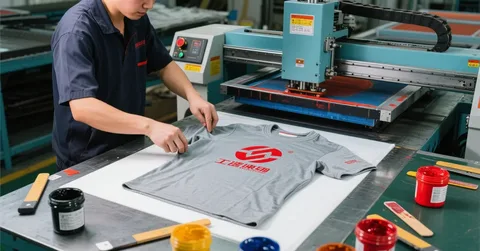
5. Choose the Right Printing and Branding Method
Printing methods affect appearance, hand feel, durability, and production economics.
| Method | Best suited for | Important consideration |
| Screen printing | Repeated designs and larger production runs | Screen setup and color requirements |
| DTG printing | Detailed, multicolor artwork | Fabric compatibility and pretreatment |
| DTF printing | Versatile designs and smaller batches | Transfer feel and wash durability |
| Embroidery | Logos and premium decorative details | Design complexity and garment weight |
Before selecting a method, request decorated samples on your actual production fabric.
A print that performs well on one cotton T-shirt may behave differently on another fabric construction.
Evaluate adhesion, cracking, color changes, and garment distortion after washing.
6. Calculate Manufacturing Costs Before Placing an Order
Custom T-shirt manufacturing costs depend on fabric, construction, decoration, order quantity, and supplier capabilities.
Larger orders can reduce unit costs, but they also expose brands to greater inventory risk.
Illustrative Production Budget
| Quantity | Example unit cost | Production total |
| 50 T-shirts | $14.00 | $700 |
| 100 T-shirts | $11.00 | $1,100 |
| 300 T-shirts | $8.00 | $2,400 |
| 500 T-shirts | $6.50 | $3,250 |
Hypothetical figures for explaining production economics. These are not verified market averages or supplier quotations.
Suppose a T-shirt sells for $35, costs $11 to manufacture, and incurs another $6 in variable expenses.
Its contribution before fixed overhead and other excluded costs is $18 per unit, or approximately 51.4% of the selling price.
But a lower manufacturing price is not automatically a better deal. Include shipping, applicable import duties, packaging, defects, and unsold inventory when evaluating the total cost.
For startups, a smaller first order with manageable risk may be more valuable than a cheaper unit price on hundreds of untested garments.
7. How to Choose a Reliable Custom T-Shirt Manufacturer
The best custom T-shirt manufacturer is one that can consistently reproduce your approved garment specifications, communicate production risks, and meet agreed quality and delivery requirements.
For brands searching for a custom t shirt manufacturer USA businesses can work with, it’s important to distinguish between a US-based manufacturer, a US-based sourcing company, and an overseas factory serving American brands.
These business models can offer different advantages, but none guarantees superior quality.
Seven Questions to Ask Before Hiring a Manufacturer
- Can you produce my exact garment? Ask for relevant examples of similar fabric weights, fits, and construction.
- What is your MOQ? Confirm whether it applies per design, color, size, or total order.
- Can you develop and revise samples? Understand sampling costs and revision policies.
- How do you manage quality control? Request details about inspections and defect handling.
- What is included in your quotation? Clarify labels, printing, packaging, shipping, and other charges.
- Who owns the patterns and technical files? Confirm ownership and future production rights in writing.
- What happens if production is delayed or defective? Establish responsibilities and remedies before paying.
Watch for These Manufacturing Red Flags
Be cautious if a supplier refuses to provide physical samples, offers unclear pricing, changes specifications without approval, or cannot explain its quality inspection process.
Another warning sign is a quotation that looks unusually inexpensive but excludes essential production services.
Practical advice: Request comparable quotations using the same tech pack. Otherwise, you may be comparing completely different garments.
8. Establish Quality Control Before Bulk Production
Quality control shouldn’t begin when the shipment is ready.
For custom T-shirts, establish inspection requirements during product development and confirm them before manufacturing.
T-Shirt Quality Control Checklist
Pre-Shipment Inspection:
- Approved reference sample available
- Fabric composition and weight verified
- Chest, length, shoulder, and sleeve measurements checked
- Neckline and stitching inspected
- Shrinkage and colorfastness evaluated
- Print or embroidery durability checked
- Labels and packaging verified
- Defect handling and acceptance criteria documented
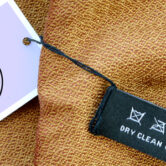
For US-bound apparel, confirm applicable textile labeling obligations. The Federal Trade Commission provides guidance on fiber content, country of origin, and care labeling.
Brands should also establish appropriate product testing requirements. For example, AATCC publishes textile testing methods covering performance characteristics such as dimensional change and colorfastness.
These references support technical accuracy, but compliance obligations depend on the product and market.
9. Turn Your First Production Run Into a Repeatable Product
Your first T-shirt collection should provide information for your second production run.
Track which sizes sell fastest, which designs generate repeat purchases, and why customers return products.
If customers consistently complain about necklines stretching, investigate rib construction and fabric recovery rather than simply changing the graphic.
If returns cluster around one size, review your grading rules and measurement tolerances.
The goal is to build a repeatable manufacturing system where improvements are documented and incorporated into future orders.
A successful T-shirt brand doesn’t just sell attractive designs. It delivers consistent products that customers can trust.
Conclusion
Custom T-shirt manufacturing is not simply about turning artwork into clothing. It’s about creating a product that feels right, fits consistently, survives normal wear, and represents your brand every time someone puts it on.
The strongest clothing brands make deliberate decisions about fabric, fit, construction, decoration, and manufacturing partnerships.
Start with clear specifications, validate your samples, control production risks, and use customer feedback to improve every collection.
The objective isn’t to manufacture the cheapest T-shirt. It’s to create a dependable product your customers will want to buy again.
Frequently Asked Questions
1. How much does custom T-shirt manufacturing cost?
Custom T-shirt manufacturing costs depend on fabric composition, garment construction, printing, branding, and order quantity. Larger production runs may lower unit costs, but brands should calculate total landed costs, including sampling, packaging, shipping, and applicable duties.
2. What is the minimum order quantity for custom T-shirts?
Minimum order quantities vary by manufacturer and production method. Private-label suppliers may offer smaller batches, while custom cut-and-sew production can require larger orders. Always confirm whether the MOQ applies per style, color, or total order.
3. What fabric is best for premium custom T-shirts?
Combed ring-spun cotton is a popular choice for premium everyday T-shirts because it can provide a soft, smooth feel. However, fabric quality also depends on yarn construction, knitting, finishing, and performance after laundering.
4. How long does custom T-shirt manufacturing take?
Manufacturing timelines depend on product complexity, sampling revisions, fabric availability, decoration requirements, production capacity, and shipping. Ask manufacturers for a written schedule covering development, sample approval, bulk production, inspection, and delivery.
5. How do I find a reliable custom T-shirt manufacturer?
Start by identifying manufacturers experienced in your preferred garment type. Compare physical samples, production capabilities, minimum order quantities, quality procedures, pricing transparency, and delivery terms before placing a bulk order.